


Just 2 Words
4.61.78K Reviews
App Specs
- Version
- 6.2
- Updated On
- License
- Free
- Downloads
- 50,000+
- Developer
- Just 2 Fun
- Categories
- Word
- Platform
- Android
Screenshots
 Analysis by AppCompare
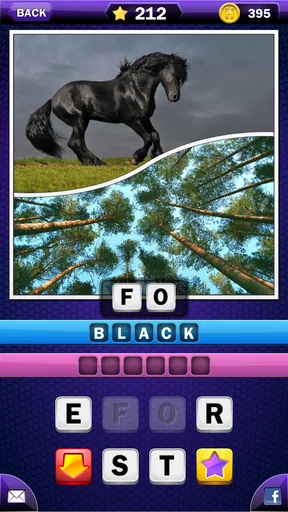
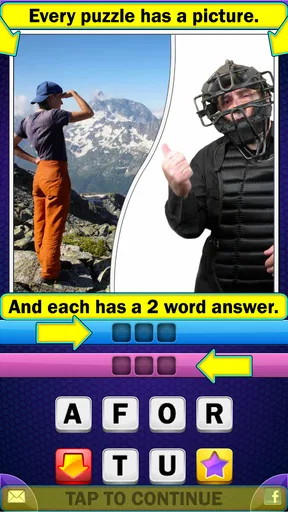
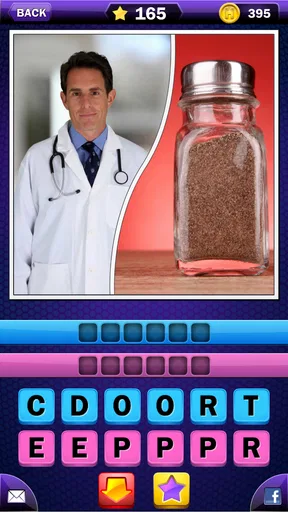
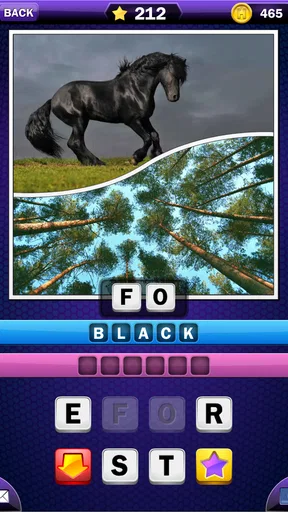
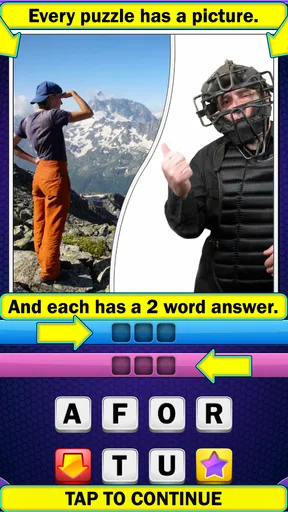
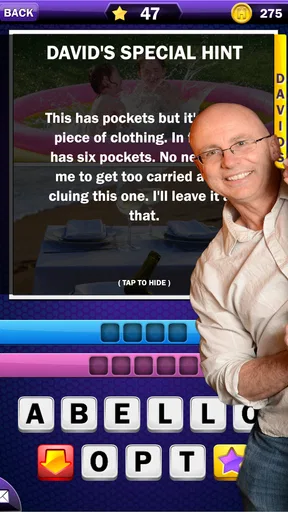
I found Just 2 Words most enjoyable as a quick shared-device word game rather than as a serious solo brain-training tool. Its basic idea is easy to explain: you work with two-word answers, solve a clue, and pass the device around when someone else has a better guess. That simplicity makes it a natural fit for a kitchen table, a waiting room, or a quiet evening when nobody wants to learn complicated rules.
The game comes from Just 2 Fun and sits in the word-puzzle category. It is free to start, marked for Everyone, and has built a sizeable audience, with over 50 thousand installs and a 4.6 average from around 5 thousand ratings. Those figures do not replace personal testing, but they do match my impression that this is a focused, approachable game with a loyal audience rather than a large all-purpose puzzle platform.
What makes it interesting is its narrow identity. Many word games revolve around spelling, anagrams, crosswords, or guessing a single word. This one asks me to think in short phrases instead. That small change affects how I play: I am not only searching my vocabulary, but also trying to recognize familiar combinations, sayings, titles, descriptions, and everyday expressions.
How it works when one device is shared
When one phone is passed around, I find it helps to agree on a simple turn order before opening the next clue. This section looks at how a shared screen can stay welcoming without letting the quickest guesser take over, and why rotating the reader can keep everyone involved. The next section considers practical ways to coordinate a relaxed group session.
A good fit for informal group play
In my experience, the strongest use case is a shared session with people who have different puzzle habits. One person may be quick with common expressions, another may notice a clever clue structure, and a third may remember a phrase that nobody else considered. Because the answer is built from two words, solving often becomes a conversation rather than a private contest.
A realistic example is a family waiting for food at a restaurant. One person opens the game, reads the clue aloud, and lets everyone offer possibilities. The phone can move from hand to hand without requiring every player to create a profile or understand a long tutorial. If the group gets stuck, the discussion itself becomes part of the entertainment. Even a wrong suggestion can point someone else toward the intended phrase.
This shared-device style also works well with friends who do not normally play mobile games. A person who avoids action games or complicated strategy titles can still understand the central task almost immediately. The game does not ask the group to master controls; it asks them to make associations and communicate clearly.
Worth Reading Before You Choose

EA SPORTS FC Mobile 26 Is a Bigger Football Game, but It Takes Time

Flipboard Shows What News Apps Must Do Beyond the Feed

Switching to Android Auto Means Rethinking Your Driving Routine

Google Calendar Makes a Crowded Week Easier to Manage

Ludo King Makes the Most of the Minutes Between Plans

Baby Panda World Brings Quick Play to Modern Phones, but Its Game Library Feels Busy
There is a useful social trade-off here. The game is more engaging when players say their ideas out loud, but that also means it is less suitable for a silent commute than a crossword or a private daily-word game. If I want a calm, individual session with no interruptions, a conventional crossword may serve me better. If I want a small activity that gives everyone a reason to participate, the two-word format has an advantage.
Why the two-word limit changes the feel
The restriction to two words sounds simple, but it creates a different kind of pressure from a standard word search. I have to judge not only whether a word fits the clue, but whether the pair sounds natural together. A technically possible combination may feel wrong, while a familiar phrase can suddenly become obvious once one part is identified.
That makes the game particularly good for verbal thinkers. People who enjoy idioms, pop-culture references, compound expressions, or playful clue interpretation will probably get more from it than players who prefer strict letter patterns. The game rewards a flexible mind, but it can also produce moments where several answers seem plausible. In a group, those moments are fun discussion points; alone, they can feel less satisfying if I cannot see why one answer was preferred.
The large puzzle collection is another reason the game can remain useful beyond a single sitting. The store summary describes more than 2,500 puzzles, so I would approach it as a substantial casual library rather than a tiny novelty. I would not expect every puzzle to match my vocabulary or interests equally well, though. A broad collection inevitably includes clues that feel immediately familiar and others that require more cultural or linguistic context.
Setting expectations before handing over the phone
Shared play works best when the group agrees on a few simple boundaries before starting. I recommend deciding whether people should answer freely, take turns, or allow a short thinking pause. Without that agreement, the quickest speaker can dominate, especially when several players are excited and call out guesses at once.
I also find it helpful to treat the device holder as the reader and referee, not automatically as the winner. The person holding the phone has access to the clue and the answer screen, so rotating that role keeps the session feeling fair. This is not a special feature of the game; it is a practical way to make its pass-and-play character work better.
Another useful habit is to stop after a natural batch of puzzles instead of trying to finish the entire collection in one sitting. Word games can become tiring when every clue receives the same level of attention. Short rounds keep the conversation lively and make it easier for younger or less confident players to stay involved.
Boundaries, coordination, and everyday use
A little coordination makes the game easier to enjoy in different everyday settings, from a family meal wait to a short break with friends. I focus here on balancing lively discussion with enough space for quieter players to think, while keeping expectations realistic if people are not in the same room. The next section turns to age context and household trust.
What setup really requires
The initial barrier is low. The game is free to download and use, while optional in-app purchases range from $0.99 to $19.99 per item. For a shared household device, that distinction matters: I would make sure everyone understands that free access and optional purchases are not the same thing. If children use the phone, the person who owns the device should handle any purchase decisions rather than leaving that responsibility to the youngest player.
The current version is 6.2, and it requires Android 6.0 or later. That makes checking the device’s operating-system version a sensible first step on an older phone or tablet. A household device that has been sitting unused may not meet that requirement, even if it still runs other simple apps.
I would also separate the question of access from the question of ownership. If several people use one phone, the game may become part of a general collection of shared activities, but that does not mean every player should have unrestricted control over the device. A parent, host, or device owner can open the game, set the session length, and keep purchase decisions in their own hands without turning the activity into a formal family-management project.
Keeping a group moving
Coordination is where this game benefits most from a little preparation. Before beginning, I would choose one person to read each clue, one person to keep the device steady, and a simple order for guesses. Those roles can change every few puzzles. The goal is not bureaucracy; it is preventing the session from becoming a scramble in which louder players answer everything.
For a mixed-age group, I would let players explain why they think an answer fits. That gives children a way to participate even when they are not the fastest guessers, and it lets adults notice whether a clue depends on a phrase the younger players have never heard. If the group reaches a disagreement, I would move on rather than turning one puzzle into an argument. The value of the game is the shared rhythm, not proving who had the most defensible interpretation.
A useful household routine is to keep the game as a short transition activity. It can fill the few minutes before leaving the house, occupy relatives while coffee is being made, or provide a low-pressure break between longer games. Because the central action is verbal, it does not demand the same uninterrupted attention as a strategy game. At the same time, it is not completely passive: players need to listen, remember suggestions, and connect ideas.
For remote coordination, I would be more cautious. The game is naturally strongest when people can pass the device and hear each other’s guesses. A video call could let one person share the screen, but that would depend on the separate call setup rather than on the game itself. If the main goal is a polished online competition with turns, rankings, and player accounts, a dedicated multiplayer word game would probably be a better choice.
Where it differs from familiar alternatives
Compared with a crossword, this game is less methodical and more conversational. A crossword gives me a visible grid, crossing letters, and a clear sense of progress. Just 2 Words instead asks me to trust language patterns and clue interpretation. I prefer the latter when I want quick guesses and discussion, but I prefer the crossword when I want a structured solo challenge.
Compared with an anagram game, it places less emphasis on manipulating letters and more on recognizing meaning. That makes it friendlier to players who dislike scrambling tiles, although it may be less satisfying for someone who enjoys exact spelling mechanics. Compared with a daily-word format, it offers a broader supply of puzzles rather than making one small session the entire event.
The trade-off is precision. Letter-based games usually show me why an answer works: the letters fit, the crossings confirm it, or the timer records a clear result. Phrase-based clues can feel more subjective. When I am in the intended frame of mind, that looseness is playful. When I am not, I may feel that the clue points toward several reasonable answers.
Age context and trust on a household device
The Everyone rating makes the game approachable for a household, but shared use still calls for sensible adult oversight, particularly around optional purchases and access to the device itself. I also consider how age-related differences in phrase familiarity can affect play without making a child feel left behind. The next section weighs those considerations for families and older players.
Why the Everyone rating helps, but does not solve everything
The game carries an Everyone content rating, which makes it easier to consider for a household device used by children and adults. Its word-puzzle format is naturally less intimidating than many competitive or action-oriented games. I would still play alongside younger users at first, not because the rating creates a special concern, but because vocabulary and cultural references can vary sharply by age.
A child may understand the clue structure but not know a phrase that an adult considers obvious. That is not a failure of the child or necessarily a weakness in the game; it is a reminder that word knowledge is personal. In a family session, adults can turn unfamiliar answers into small teaching moments, while children may surprise everyone with expressions they have picked up from school, books, or media.
Trust also involves how the device is shared. I would let a child suggest answers and handle the phone during a supervised round, but I would keep responsibility for purchases and general device access with the owner. The game is free to begin, yet the presence of optional items means a shared-device arrangement should have a clear adult boundary.
For older relatives, the game can be inviting because it relies on language rather than fast reflexes. The main question is whether the clue vocabulary feels familiar and whether the screen is comfortable to read. In a group, another player can read aloud, which removes much of the friction. That makes it a more inclusive choice than games that depend on rapid tapping or small visual targets.
Who should choose something else
I would not make this my first recommendation for someone seeking a deep, measurable training program. It is a casual word game, and its pleasure comes from solving and talking rather than from a detailed learning plan. Someone who wants progressive lessons, formal vocabulary study, or carefully tracked improvement should look at a dedicated language-learning or puzzle-training app instead.
I would also steer away from it if the household wants private profiles, elaborate player statistics, or a strong competitive ladder. The appeal here is immediate access and shared guessing. Players who need personal histories, synchronized progress, or a fully designed online community may find the experience too lightweight.
Finally, a person who dislikes ambiguity may prefer a crossword, spelling game, or tile-based word challenge. The two-word concept is the game’s identity, but it also means that interpretation matters. If I become frustrated whenever a clue can be approached from several directions, the format may work against me rather than with me.
My household verdict after living with the format
I see Just 2 Words as a dependable conversation starter with enough content to justify keeping it on a shared device. Its best quality is not complexity; it is the way a compact clue can bring several people into the same thought process. The game gives a family or group of friends an easy reason to compare associations, explain guesses, and laugh at answers that seemed obvious only after they appeared.
The developer, Just 2 Fun, keeps the experience centered on the word-puzzle idea instead of burying it under unrelated systems. That focus is welcome. I can open it for a short session without first organizing a team, learning a control scheme, or committing to a long campaign.
There are limits I would keep in mind. The phrase-based structure can feel subjective, the social experience depends on players coordinating themselves, and optional purchases deserve an adult boundary on a household device. It is also less compelling for someone who wants solitary, highly structured progression. Those are not reasons to reject it; they simply define the audience more clearly.
If I were recommending it to a friend, I would say this: choose it when you want a free, accessible word game that works especially well with people sitting together. Let one person read, rotate the device, and agree on a relaxed turn order. Give younger players room to ask about unfamiliar phrases, and do not let purchase decisions become part of the guessing session.
After that, the decision is straightforward. For a shared phone or tablet used by a household, the best reason to install it is its low-pressure group conversation. For a private player who wants rigorous clues, detailed progress tracking, or online competition, another word-game style may be a better match. My own verdict is positive: it is a focused, friendly choice for casual puzzle time, especially when the people around me are more important than the score.
Pros
- Simple rules make it easy to start playing immediately.
- Short rounds are ideal for quick breaks or casual sessions.
- Word clues encourage creative thinking and flexible associations.
- Minimalist presentation keeps the focus on the puzzle itself.
- Suitable for playing alone without requiring an internet connection.
Cons
- Some clues may feel subjective and have more than one valid answer.
- Puzzle variety can become repetitive during longer play sessions.
- Difficulty may fluctuate noticeably between consecutive rounds.
- Limited features may disappoint players seeking deep progression systems.
- Ads may interrupt gameplay
- depending on the device and version.
FAQs for Just 2 Words
What is Just 2 Words?
Just 2 Words is a casual word puzzle game built around solving clues with two-word answers. Each puzzle asks you to identify a familiar phrase, expression, title, or combination of words from a short hint. The concept is easy to understand, but later challenges can require strong vocabulary, lateral thinking, and attention to wording. It is designed for quick sessions and relaxed, solo play.
How does the gameplay work in Just 2 Words?
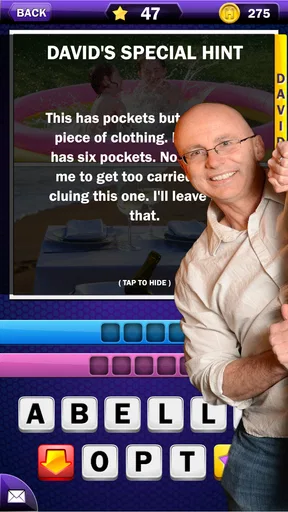
The main gameplay loop is straightforward: read the clue, think of a suitable two-word response, and enter your answer using the available letters or keyboard. Some clues can have several possible interpretations, so the exact wording matters. Progress generally comes from solving puzzles one at a time, while hints or other assistance may help when you are stuck on a particularly difficult answer.
Is Just 2 Words free to download and play?
Just 2 Words can typically be downloaded without an upfront purchase, allowing players to try the core puzzle experience at no initial cost. However, free versions of mobile games may include advertising, optional in-app purchases, or paid hint systems. Before downloading, it is worth checking the current Google Play or App Store listing for the latest pricing, advertisements, subscriptions, and purchase details available in your region.
Does Just 2 Words require an internet connection?
The basic word puzzles may be playable without a constant internet connection, which makes Just 2 Words suitable for short sessions while traveling or when mobile data is unavailable. Nevertheless, an internet connection may be needed for advertisements, purchases, updates, synchronization, or certain online features. Availability can vary by version and device, so testing the game in offline mode is recommended.
Is Just 2 Words suitable for all ages and skill levels?
Just 2 Words is generally approachable for casual players because its controls and rules are simple, while the vocabulary challenges provide enough difficulty for experienced word-game fans. Younger players may benefit from the educational aspect of recognizing phrases and expanding vocabulary, although some clues can depend on cultural references or advanced language knowledge. Parents should review the store rating and advertising or purchase settings before allowing children to play.


